
How to Improve Japanese Conversation Skills: Strategies for Working Professionals
Do you feel like your brain freezes when you try to speak Japanese? Do you spend too much time translating in your head from English, only to realize the conversation has already moved on? If your goal is to live and work in Japan, being able to communicate fluently and naturally is absolutely crucial. Many dedicated learners struggle with this exact barrier, but it is entirely possible to overcome. This article will show you how to break the translation habit, increase your speaking speed, and advance to a professional level of Japanese fluency, making you a top candidate for Japanese companies.
Stop Translating and Start Thinking in Japanese
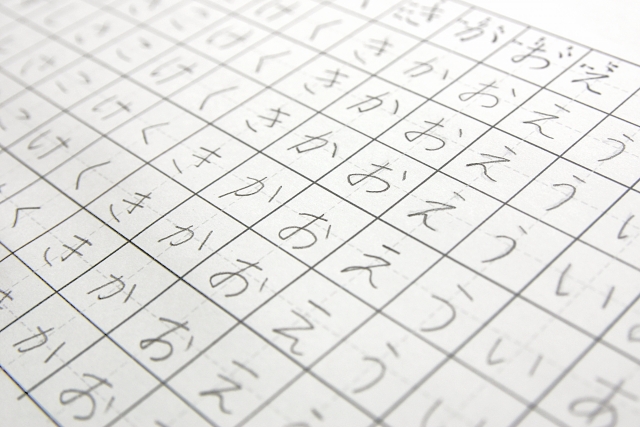
The biggest bottleneck for English speakers learning Japanese is the subconscious urge to translate. When you think in English, structure the sentence, and then try to swap English words for Japanese words, you will always be too slow. Furthermore, many English phrases simply do not have a direct Japanese equivalent, causing even more confusion and delays. To achieve natural fluency, you must train your brain to think directly in Japanese.
- Practice Short Response Expansion: Instead of just saying “Yes” (はい – Hai) or “I understand” (わかりました – Wakarimashita), challenge yourself to add one more sentence immediately.
- Practical Example: If someone asks, “Do you like chocolate?” (チョコレートは好きですか? – Chokorēto wa suki desu ka?), don’t just say “Yes, I like it.” Instead, aim for “Yes, I like it. Especially sweet ones.” (はい、好きです。特に甘いのが好きです。 – Hai, suki desu. Tokuni amai no ga suki desu.)
- Use Filler Words: Learn to use natural Japanese filler words like “Well…” (ええと… – Eeto…) or “Let me see…” (そうですね… – Sō desu ne…) to buy yourself thinking time without going silent.
Step-by-Step Training for Professional Fluency

Fluency doesn’t happen overnight; it is built through targeted, incremental training. In a professional Japanese environment, you need more than just vocabulary; you need the ability to structure your thoughts logically and express complex ideas smoothly. My approach focuses on breaking down “speaking” into manageable stages so you can see tangible progress every single day.
- Mastering Business Context: Knowing the right vocabulary for a meeting is useless if you can’t deliver it confidently. We focus on role-playing scenarios common in Japanese workplaces, such as giving progress reports, asking for clarification, or handling client complaints.
- Practical Example: Instead of just practicing vocabulary lists, we simulate a scenario where you have to explain a delay in a project to your manager. This forces you to use appropriate polite language (Keigo) while focusing on speed and accuracy simultaneously.
- Gradual Complexity: We start by lengthening simple sentences, then move to connecting ideas, and finally to constructing full paragraphs for presentations or negotiations.
The Importance of Japanese Proficiency in Japanese Workplaces

Having worked for 4 years in a major Japanese telecommunications company, I have seen firsthand how language skills impact career growth. The company had over 300 employees, and I worked closely with colleagues from various countries, including the US and Korea. What shocked me was that the most successful foreign employees were nearly indistinguishable from native speakers in their Japanese ability. Even executive-level positions were filled by foreign nationals who were not just technically skilled, but also highly effective communicators in Japanese.
- Friendly Professionalism: The most successful international employees were not just functional; they were friendly, easy to talk to, and deeply integrated into the office culture.
- Practical Example: In a meeting, being able to not only understand the technical aspects but also to use humor or nuanced politeness (Keigo) can bridge the gap between being a contractor and being a trusted team member.
- Career Advancement: For those aiming for high-level positions in top-tier Japanese firms, high-level Japanese conversation skills are not just an advantage; they are a necessity.
Summary: Your Path to Professional Japanese Conversation
To move from a dedicated learner to a confident professional working in Japan, you must stop translating in your head and start building your thoughts directly in Japanese. By mastering the art of expanding your sentences and utilizing structured, step-by-step training, you can significantly increase your speaking speed and accuracy.
Ready to take your Japanese to the next level and land your dream job in Japan? Book a free trial lesson with me today, and let’s create a customized plan to turn your fluency goals into reality.
Want to improve your Japanese speaking?
Book a free 30-minute trial lesson. We'll assess your level and build a study plan around your real-life goals.
Get your free trial lesson